Projects
I approach projects as system-building efforts grounded in real-world constraints.
Each reflects an attempt to take a technical idea — often at the intersection of sensing, AI, and physics — and turn it into something that can operate reliably, scale, and persist outside the lab.
Althea
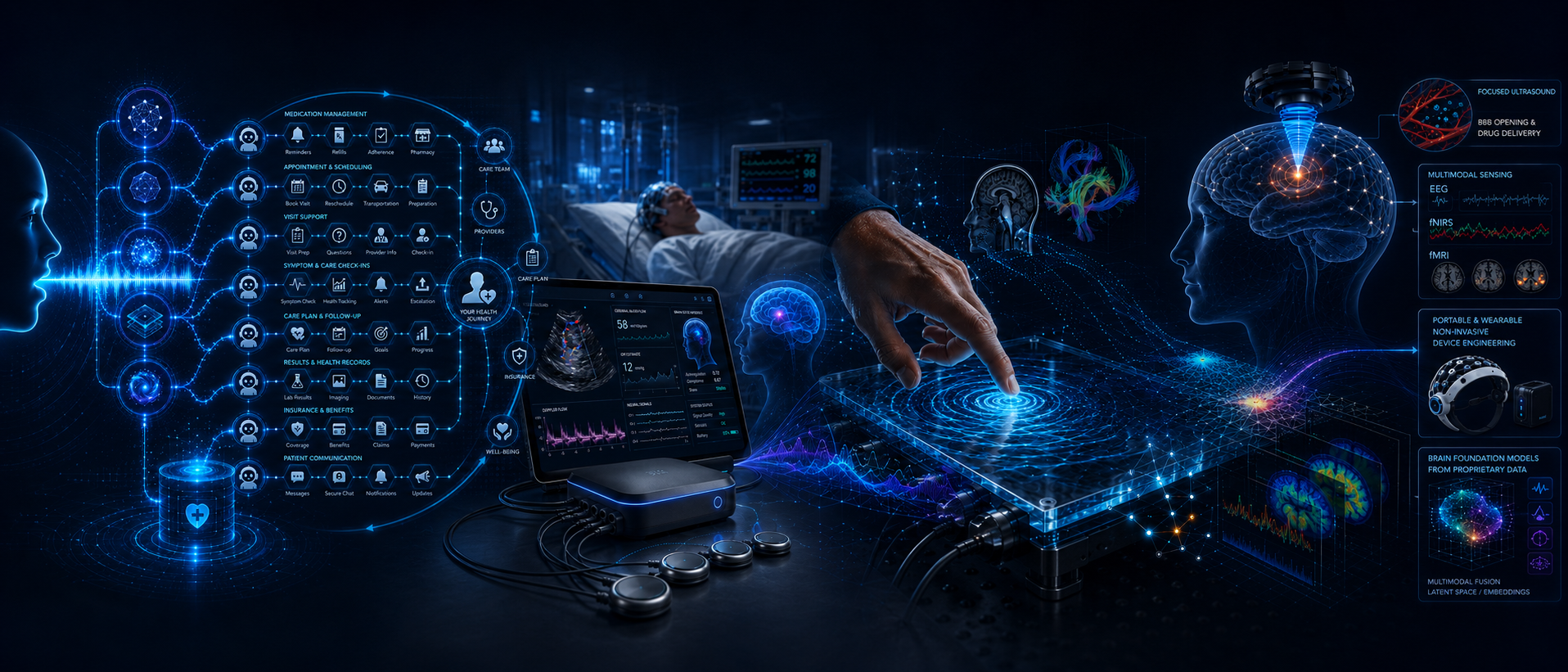
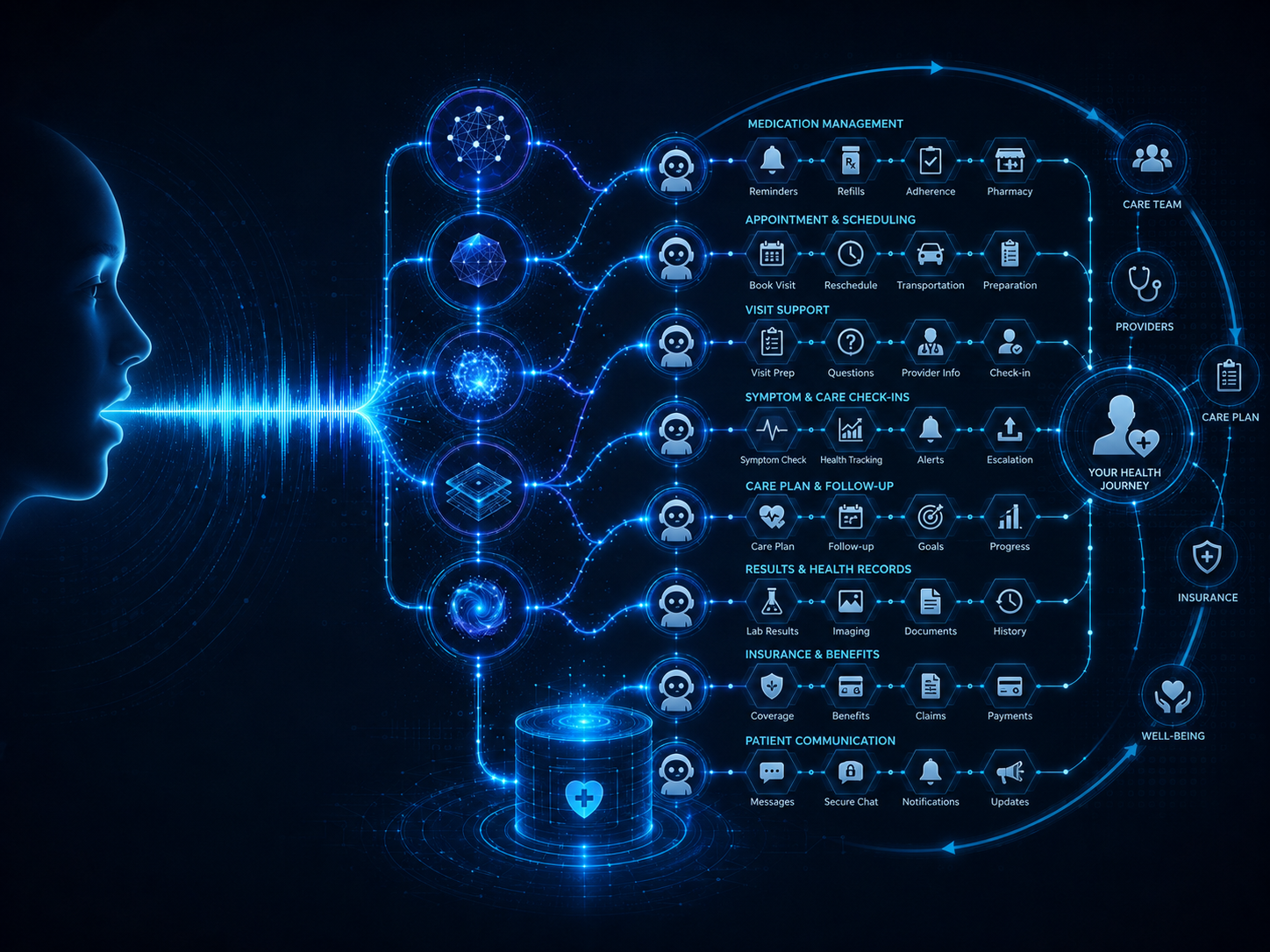
Co-founder & CEOA voice-first AI platform deploying autonomous, closed-loop agents that interact with humans through language, action, and feedback.
We leveraged core system design principles to enable large-scale agent orchestration and parallelization across complex, multi-step asynchronous workflows in high-stakes settings, where tolerance for errors is low.
Healthcare serves as a high-stakes proving ground, but the platform is about much more than a single vertical — it is a testbed for how AI systems can operate continuously, adapt to humans, and perform real work over time. We have deployed across care management, pharma, and payer environments, spanning administrative and clinical workflows.
- Specialized multimodal models, LLMs, and reasoning engines
- Real-time, ultra-low-latency, realistic voice interaction
- Longitudinal memory and feedback loops
- Orchestration for multi-step task execution, tool use, and human-in-the-loop control
Neural Interface Systems at Yale
Adjunct FacultyMoving frontier neurotechnology from research environments into deployable, scalable systems validated through preclinical and early clinical studies.
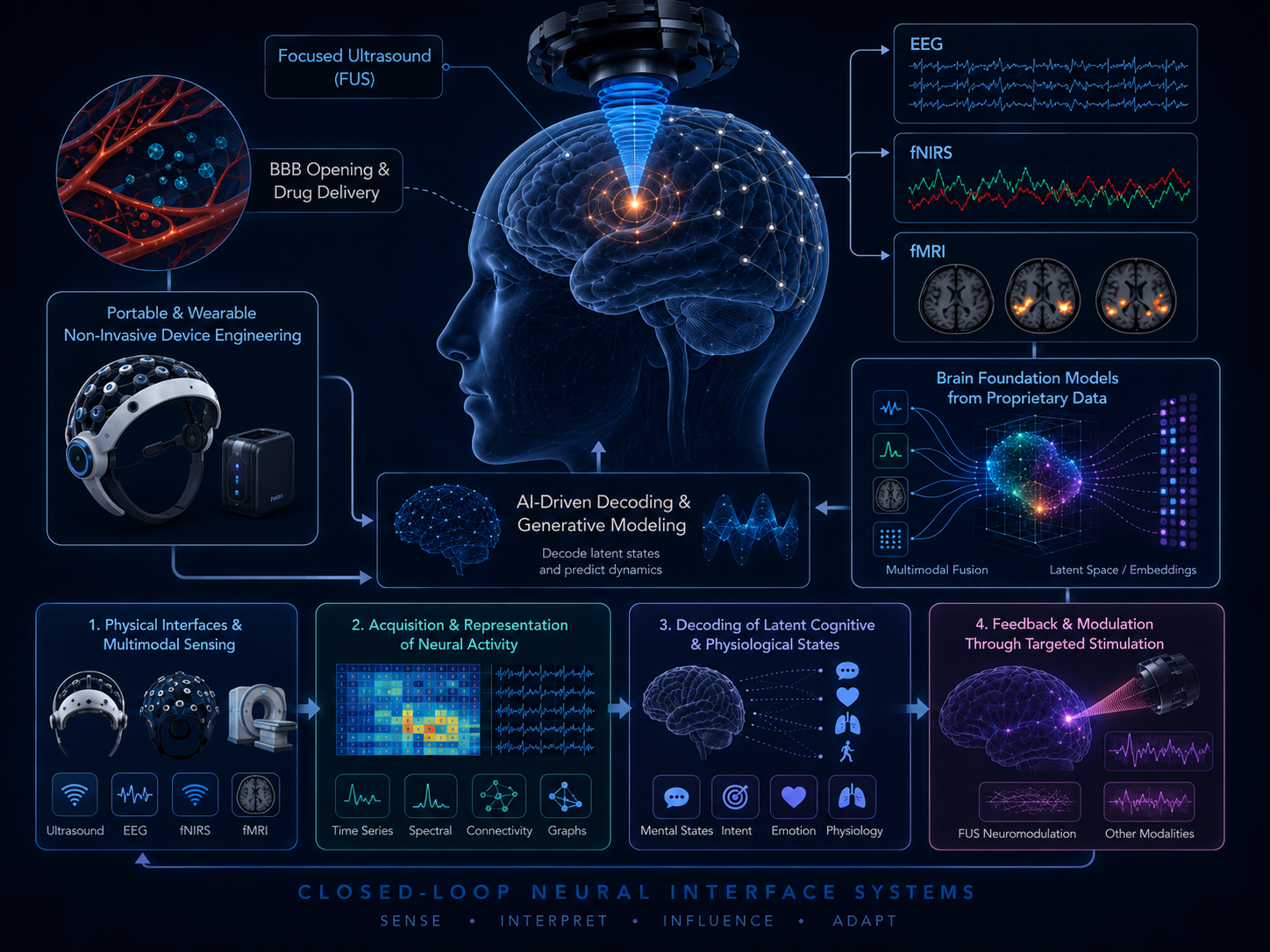
A central theme is building integrated neural interface systems that combine sensing, modeling, and modulation of brain activity — across intracranial and surface EEG, fNIRS, fMRI, Ultrasound, OPM, and emerging microelectronic enegineering, coupled with AI-driven neural decoding and generative modeling.
The challenge is not just advancing components, but unifying them into coherent systems where neural signals can be captured, interpreted, and influenced in a closed loop — robust to biological variability and constrained by safety and regulatory reality.
A key focus has been on AI-assisted neural decoding, where models learn to map high-dimensional, noisy neural signals into meaningful representations that can support communication, control, or therapeutic intervention. In parallel, generative and adaptive models enable systems that evolve with the user over time.
- Physical interfaces & multimodal sensing (ultrasound, EEG, fNIRS, fMRI)
- Acquisition and representation of complex neural activity
- Decoding of latent cognitive and physiological states
- Feedback and modulation through targeted stimulation
Acousto-Encephalography (AEG)
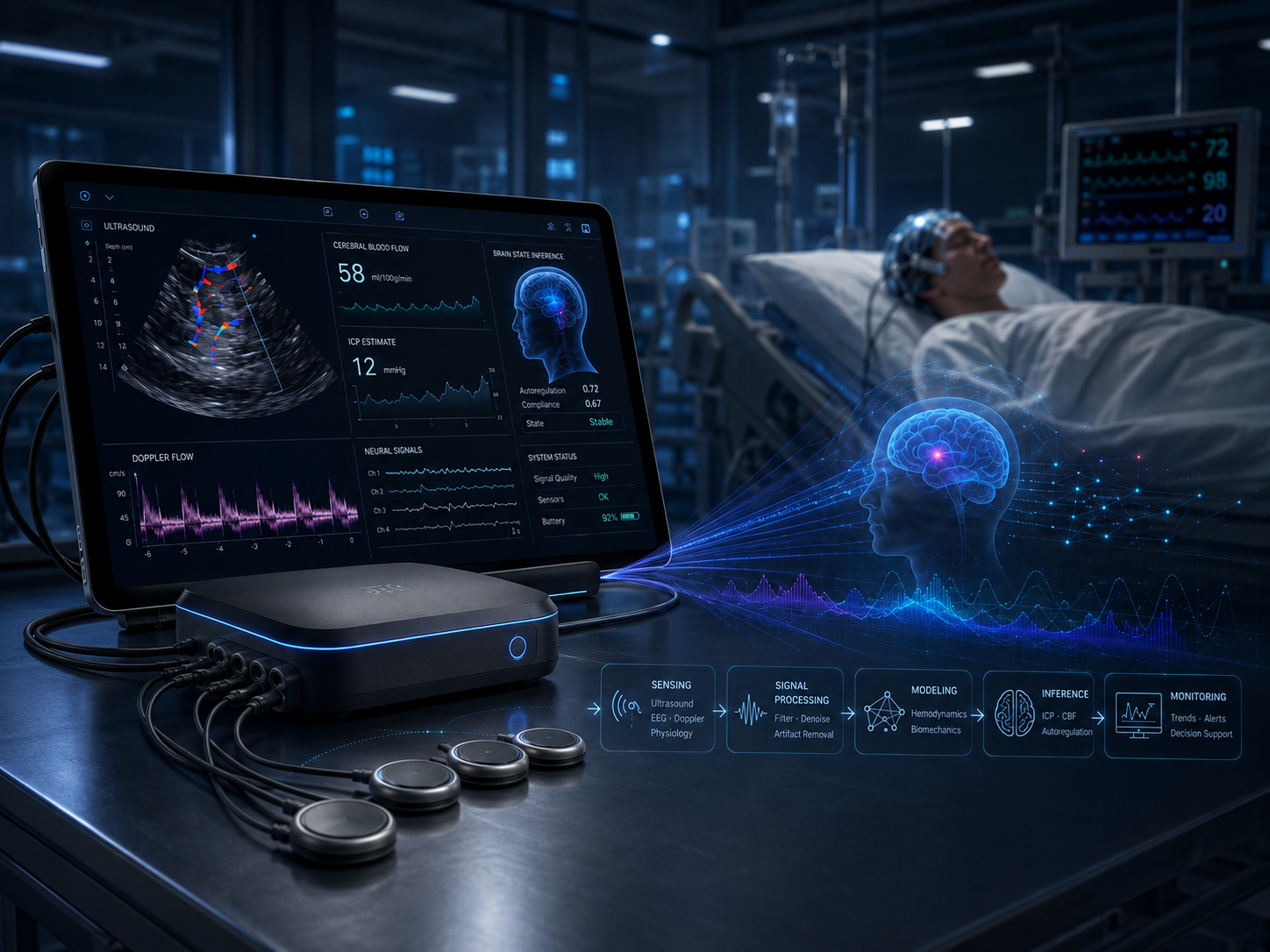
R&D LeadA non-invasive, multimodal brain sensing platform extracting meaningful physiological signals from one of the most complex and noisy systems we know — the human brain.
We combined ultrasound, electrophysiology, and other sensing with signal processing and machine learning to infer latent states such as cerebral blood flow (CBF) and intracranial pressure (ICP). This led to Acousto-Encephalography (AEG), a new sensing approach to non-invasively estimate ICP and brain perfusion.
These platforms were not just devices — they were closed-loop systems integrating sensing, inference, and decision-making under uncertainty, designed for TBI, stroke, and epilepsy where continuous monitoring meaningfully impacts care.
A key aspect of the work was bridging physics-based modeling and data-driven approaches—combining first-principles understanding of wave propagation and tissue interaction with machine learning models that could adapt to real-world variability.
- Transducers operating through complex biological media
- Acquisition pipelines robust to noise and patient variability
- Models mapping noisy measurements to clinical representations
- Embedded + cloud + real-time inference in one pipeline
Sensing, Imaging & Modeling
Research Scientist · PhDExtracting meaningful information from physical systems that are inherently complex, nonlinear, and often chaotic.
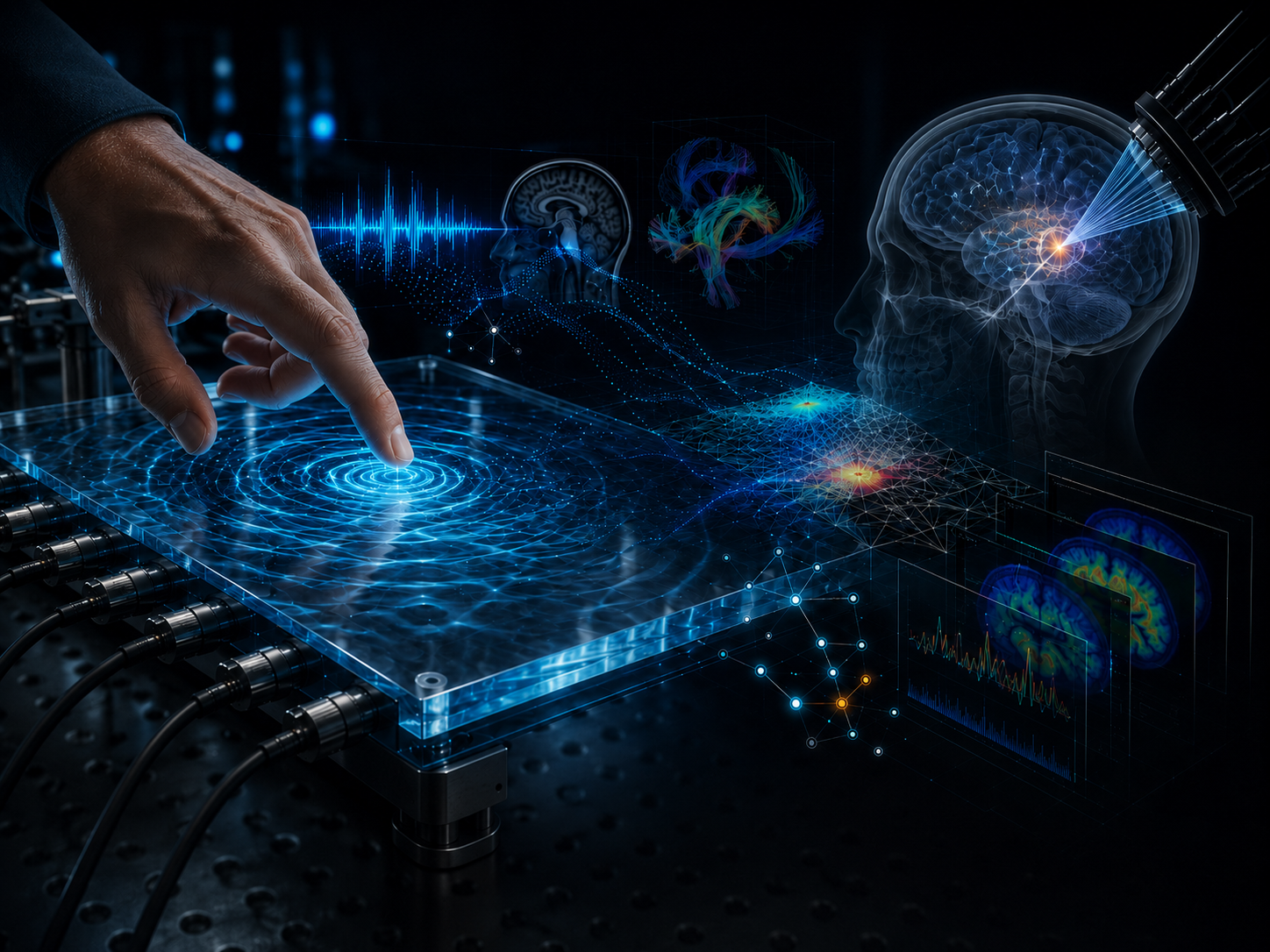
My PhD developed an ultrasonic touchscreen based on guided Lamb waves and wave chaos — leveraging complex interference patterns with learning-based methods to localize touch, extending into localization and inference in reverberant, ill-conditioned environments.
My postdoctoral work tackled a fundamental challenge: how to deliver and control ultrasound through the skull — foundational for neuromodulation and BBB opening. A unifying theme was multiscale modeling and system design, from PDE/finite-element models to reduced-order and equivalent-circuit representations.
- Ultrasound imaging, airborne sensing, tissue characterization
- Ultrasonic and MEMS device engineering
- Transcranial ultrasound propagation and aberration correction
- Physical mechanisms of ultrasound neuromodulation
- Inverse problems: reconstructing hidden states from noisy data
Other ad-hoc projects
Coming soon — a rotating set of smaller experiments and prototypes.
50+ publications · 50+ patents
Work spanning early academic research through commercial deployment. Rather than listing everything, here is representative work — the full list lives on Google Scholar.
Google Scholar- Non-invasive neural sensing and brain vital monitoring
- Acousto-encephalography (AEG) and advanced ultrasonic interfaces
- Focused ultrasound neuromodulation and blood–brain barrier opening
- Machine-learning-driven sensing and signal interpretation